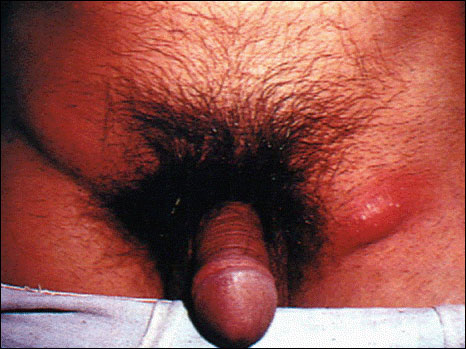
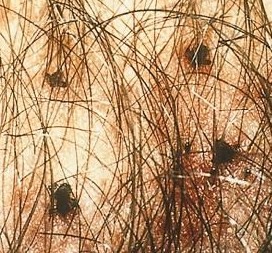
Pubic lice is caused by parasites, a parasite is defined as: an organism living in, with, or on another organism. Pubic Lice are six- legged creatures that most commonly infest hair in the pubic area, although they can also infest other body hair. Pubic Lice is contracted USUALLY by sexual contact (it could also be contracted by clothing, towels, bedding, etc.) and occurs most commonly in adults.
Symptoms- Some physical symptoms you possibly could have: Itching in the genital area, light-brown insects the size of a pinhead moving on your skin or oval eggs attached to your body hair or you may experience no symptoms at all.
Incubation- After you are exposed to pubic lice, symptoms may occur in 2-6 weeks after contact.
Untreated-If the infection is left untreated; it will continue to spread to every family member in the home and will cause redness in the skin and itching in the infected areas. The lice will also hatch more eggs and the infection won’t get any better.
Effects on the baby-Pubic Lice have not been known to affect the baby's health or the mother's health; when she is pregnant. Although, it is important for pregnant women or nursing mothers to inform their physician of a healthcare professional about the pregnancy when seeking remedies to treat pubic lice. In addition, it may be beneficial for you and your unborn baby to get tested for STI’s including HIV, as early as possible.
Treatment- There is multiples ways to treat pubic lice, here are some ways: use a lice killing lotion containing 1% permethrin, Lindane shampoo which is a prescription medication that can kill lice and lice eggs, and Malathion lotion which also is a prescription medication and can kill lice and some lice eggs. You should wash the infected area,(towel dry) put on new clothes and underwear, machine-wash and machine-dry your clothes you had on 2-3 days prior to the treatment in hot water, repeat treatment in 9-10 days if live lice are still found, and you should be evaluated for any other STI’s
Prevention- There is multiple ways to prevent pubic lice. The best way to prevent pubic lice would be to abstain from sex. Also, only having sex with someone who does not have pubic lice is another way to prevent it. Lastly, not sharing towels, clothes, and bedding used by infested people is another way to remain safe from those creepy crawlers.

Nick Henry
 Credits
CDC - Lice - Pubic "Crab" Lice - Treatment." Centers for Disease Control and Prevention. 2 Nov. 2010. Web. 18 Dec. 2011.
"Pubic Lice (Crabs) and Pregnancy." Pregnancy Info: Birth, Baby, and Maternity Advice. Web. 18 Dec. 2011.
"Pubic Lice (Crabs) Causes, Symptoms, Diagnosis, and Treatment on MedicineNet.com." Web. 18 Dec. 2011.
"Pubic Lice." SkinChoice, Provider of Products for Herpes, HSV, Genital Warts, HPV, Condyloma, Herpes Treatments, Genital Wart Treatments, Acne, Acne Treatments, Scars, Scar Treatments, Wrinkles, Fin Lines, Anti Aging, AIDS, HIV, Immune System Supplements, STD, STDS, Sexually Transmitted Diseases, STD Photos, Chancroid, Chlamydia, Genital Herpes. Web. 18 Dec. 2011.
"Prevent Disease.com - The Facts On Pubic Lice." Prevent Disease.com - Aiming Towards Better Health. Web. 19 Dec. 2011.
Brown U. "Pubic Lice and Scabies." Web. 16 Dec. 2011
Sexually Transmitted Diseases (STDs)." Self Help Sexuality Guide for Everyone. 2010. Web. 16 Dec. 2011